

If you’ve never tried Reformer Pilates before, the machine can look a little intimidating. There’s a moving platform, springs, straps, bars and quite a few different settings, but once you understand what everything does, it’s actually much simpler than it looks.
The Reformer is designed to support your movement while also adding resistance, allowing you to work on strength, control, balance, flexibility and stability throughout your whole body.
So, whether you’re thinking about booking your first class or you’re simply curious about how Reformer Pilates works, here’s everything you need to know before getting on the machine.
What is a Reformer Pilates machine?
A Pilates Reformer is a piece of equipment originally developed as part of the Pilates method. At first glance, it looks a little like a narrow bed, but the main difference is that the surface you exercise on moves.
This moving platform is called the carriage. It slides backwards and forwards along the frame of the Reformer and is connected to a system of springs.
During a class, you might exercise lying down, sitting, kneeling or standing. Depending on the movement, you’ll use different parts of the machine to create resistance or support your body.
One of the things that makes Reformer Pilates so versatile is that the machine can be adjusted throughout the class. The springs, straps and footbar can all be used differently depending on the exercise.
The main parts of a Reformer
You definitely don’t need to memorise the anatomy of the machine before your first class — your instructor will guide you through everything, but knowing a few of the main parts can make it feel much less unfamiliar.
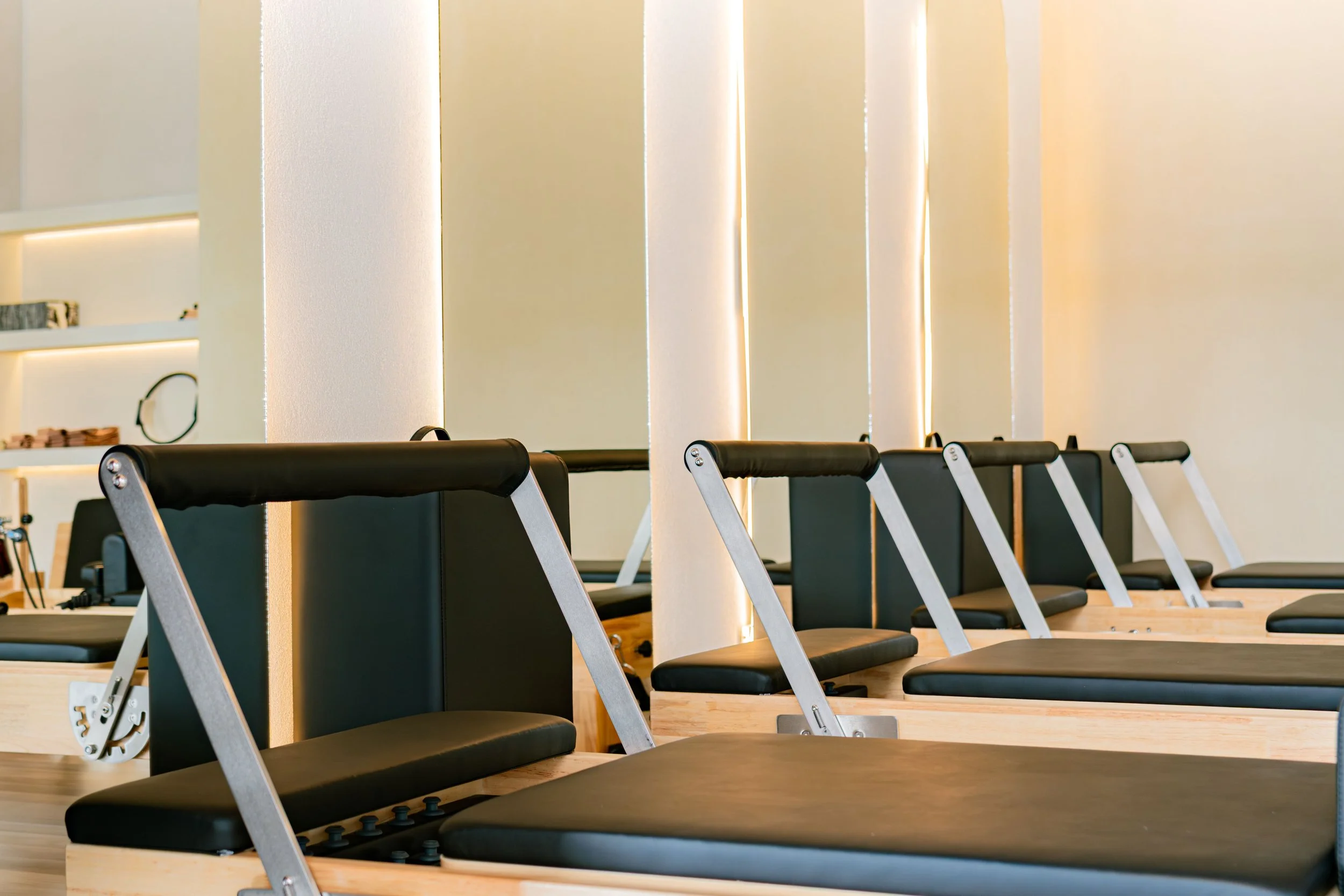
The carriage
The carriage is the large padded platform in the middle of the machine.
It moves backwards and forwards along the rails as you exercise. You might lie on it for footwork, kneel on it, sit on it or even stand on it depending on the exercise.
Learning to control the movement of the carriage, rather than simply letting it move, is a big part of Reformer Pilates.
The springs
Underneath the carriage, you’ll find a series of springs that connect it to the frame.
The springs provide resistance and support, and your instructor will tell you which ones to use for each exercise.
Something beginners often assume is that more springs automatically means a harder exercise, but that isn’t always the case. In some movements, heavier springs create more resistance; in others, lighter springs mean your body has to work harder to control and stabilise the carriage.
That’s why it’s always important to follow your instructor’s spring settings rather than changing them yourself.
The footbar
At one end of the Reformer is the footbar.
As the name suggests, you’ll often place your feet against it, particularly during footwork exercises, but it can also be used with your hands in exercises such as planks and other full-body movements.
The footbar can usually be adjusted into different positions depending on the exercise and the person using the machine.
The straps and loops
The Reformer also has straps attached to the machine, usually ending in loops for your hands or feet.
These allow you to use the resistance of the springs while moving your arms or legs through different ranges of motion.
If you’ve ever seen a Reformer Pilates video where someone is lying on their back with their feet inside straps and moving their legs through circles, this is the part of the machine they’re using.
The shoulder blocks and headrest
At the top of the carriage you’ll find two padded shoulder blocks. These help position and support your body during certain exercises and can also be used as something to hold or press against.
Between them is the headrest, which can normally be adjusted depending on the exercise and your position.
Again, you don't need to worry about knowing exactly when everything should be up, down or adjusted. Your instructor will guide you through the setup throughout the class.
What should you wear for Reformer Pilates?
You don't need a special Pilates wardrobe to come to your first class.
The most important thing is to wear comfortable, stretchy clothing that allows you to move freely and stays relatively close to your body.
Leggings, fitted shorts, sports bras, fitted T-shirts and workout tops all work well.
There is a practical reason for choosing more fitted clothing. You’ll move through lots of different positions during a Reformer class, and very loose clothing can move around, get in the way or potentially catch around parts of the machine. Fitted clothing also makes it easier for your instructor to see your alignment and help you adjust your technique when needed.
Try to avoid very baggy trousers, oversized tops or clothing with lots of loose fabric. Clothing with large zips, buttons or other hard details can also be uncomfortable when you’re lying on the carriage.
And you can leave your trainers at the door — you won't need them on the Reformer.
Do you do Reformer Pilates barefoot?
This is one of the most common questions we hear from people before their first class.
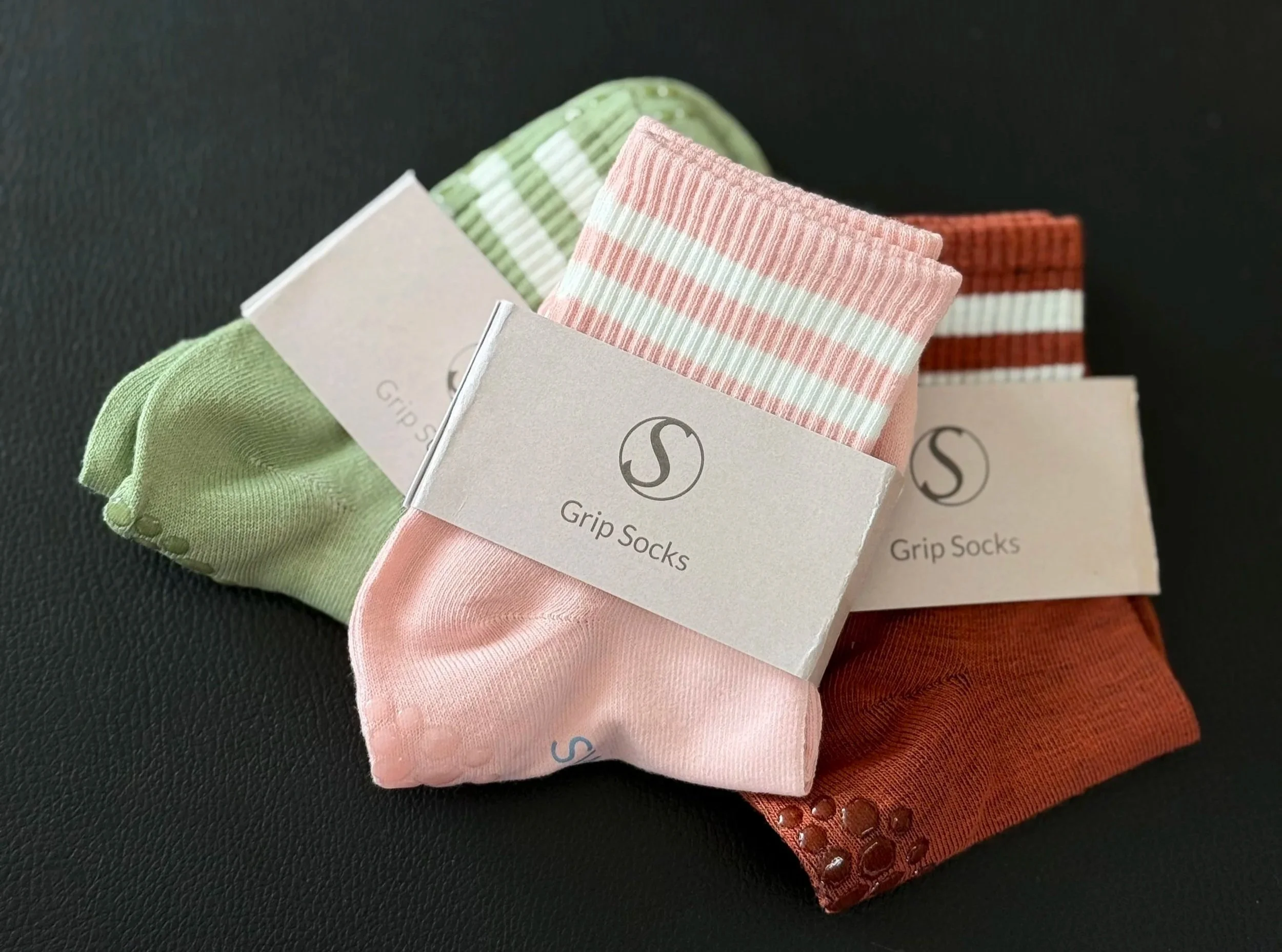
At Sway Pilates, we wear grip socks on the Reformer rather than exercising barefoot.
Grip socks look similar to regular socks but have small rubber or silicone grips underneath the foot. These give you extra traction when your feet are on the carriage or footbar and help you feel more secure, particularly during standing or balancing exercises.
They’re also a more hygienic option when equipment is being shared between classes.
Regular socks aren't a good substitute. Without the grips underneath, normal socks can actually make your feet more slippery on the machine.
So for your class, think grip socks rather than bare feet, regular socks or shoes.
What shouldn't you wear to Reformer Pilates?
There aren't many rules when it comes to what you wear, but a few things are best left out of your Pilates outfit:
Loose or very baggy clothing: it can move around, hide your alignment and potentially get caught around parts of the machine.
Regular socks: they don't provide the same traction as grip socks and can be slippery.
Trainers or shoes: Reformer Pilates is generally performed without shoes.
Clothing with uncomfortable zips or hardware: remember, you'll spend quite a bit of time lying, sitting and moving against a padded surface.
Long or dangling jewellery: necklaces, bracelets or other pieces that could catch on straps or equipment are better removed before class.
If you have long hair, it’s also worth tying it back so it stays out of your way. A low ponytail or braid can be particularly comfortable when you're lying on the headrest.
Is the Reformer suitable for beginners?
Absolutely.
You don't need previous Pilates experience, exceptional flexibility or a certain level of fitness before starting Reformer Pilates.
In fact, one of the advantages of the Reformer is how adaptable it is. Springs and different positions can provide support when you need it, while exercises can also be progressed as you become stronger and more confident.
The most important thing when you're starting is choosing a class appropriate for your level and letting your instructor know that you're new.
Don't worry if everyone else seems to know immediately what “feet in straps”, “footbar” or a particular spring setting means. Nobody knows the terminology when they first start.
After a few classes, it becomes second nature.
What should you expect from your first Reformer Pilates class?
Your first class is mostly about getting familiar with the machine and learning how to move with control.
Your instructor will explain how to set up your Reformer, which springs to use and where your hands and feet should go. You’ll then move through different exercises targeting different areas of the body.
And although Reformer Pilates is low impact, don't mistake that for easy.
Some movements might look very small from the outside but feel completely different when you're the one trying to control a moving carriage against spring resistance.
You may feel muscles working that you didn't even realise you had.
The best thing you can do during your first few sessions is listen to your instructor, focus on your own movement rather than what the person next to you is doing, and give yourself time to understand the machine.
The Reformer might look complicated when you first walk into the studio, but it doesn't take long for it to start feeling familiar.
And once you know your carriage from your footbar and your springs from your straps, you can stop thinking about the machine — and start enjoying what you can do with it.